Showing posts with label consumption. Show all posts

Sunday, January 30, 2011

Economics of Happiness

Brooklyn Flea 6.6.2010 Dean Kelm

Last Thursday, post blizzard no. 2, I stepped into my rubber boots (the brilliant Loeffler Randall pair), trudged through the piles of snow and slush ponds to attended a screening of The Economics of Happiness, the "closed" Cooper Hewitt Great Hall. My friend, gifted patternmaker and co-conspirator Gabby met me to watch this moving documentary about the effects of globalization and the localism movement bubbling up in response to our declining mental and environmental health.
It's a bit ironic, but I really believe I moved to NY to escape globalization and find my "Sesame Street". I wanted to find neighborhood to live in, a place where there were still local businesses, family owned businesses (like the one I grew up in), artists, craftspeople, food cooked from scratch in small batches and distinct culture. Brooklyn, more specifically has provided me with a nutritious local life and a foundation to build a happy life. This is where I have chosen to live but this movie showed many locations around the world where happiness thrives or thrived before the subsidized big boxes, western marketing and the pressure of consumption moved in.
This could turn into a REALLY long blog post but I suggest you,
SEE THIS MOVIE, buy the DVD, hold a screening.
We live on a planet with finite resources and continue to demand infinite growth at any expense.
In addition, check out these other organizations writing about New Economic Theory/Alternatives. Its not scary, it'll make you happy, I promise.
BALLE Business Alliance for Local Living Economies
NEW ECONOMICS INSTITUTE (formerly the EF Schumacher Society)


Tuesday, December 21, 2010

Do You Love What You Wear?


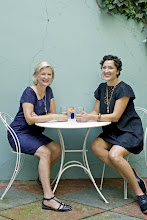
So work slowed up and for the first time in 10 months, I left the office early to meet Tara St. James at a Stoll seminar on Life Cycle Analysis (much to my surprise, not the cradle to cradle kind, more the trend kind?) and was free to play around 5:30! Tara stepped in as, Cruise Director and activity no. 1 was a Wear Your Love party thrown by founders Anna Schori and Sofia Hedstrom.
way of reminding people to value and cherish their clothes. With various collaborators we host Wear Your Love parties in the US and Europe where we invite guests to tell us their personal memories attached to their inherited coats, party dresses and band t-shirts. In the romantic light of our photo boot we document the love. If you can’t make it to our next party we hope you can share your love by sending in your story and a picture to us. Wear Your Love – respect your clothes by remembering their story.
In the first decade of the 21st century we have consumed clothes like fast food, stuffing our groaning wardrobes like sartorial gluttons, but with every trendy new garment that ended up hanging unused in the closet we lost some clothing common sense.

Tara brought to my attention that Sophia had actually spent the last year abstaining from making any fashion purchases and it all seems fuzzy now but, I suggested we do the same??? So we are. Starting January 1.


Sunday, December 12, 2010

SLOW MONEY MEET SLOW FASHION


Dave Cole, "The Money Dress," (Detail of dollar bill fabric), approximately one-thousand one dollar bills cut into continuous strips and knit together in the pattern of a Vera Wang evening gown, 2006.


SLOW FASHION MEET SLOW MONEY.
Slow Money Principles include:
I. We must bring money back down to earth.

II. There is such a thing as money that is too fast, companies that are too big, finance that is too complex. Therefore, we must slow our money down -- not all of it, of course, but enough to matter.

III. The 20th Century was the era of Buy Low/Sell High and Wealth Now/Philanthropy Later—what one venture capitalist called “the largest legal accumulation of wealth in history.” The 21st Century will be the era of nurture capital, built around principles of carrying capacity, care of the commons, sense of place and non-violence.

IV. We must learn to invest as if food, farms and fertility mattered. We must connect investors to the places where they live, creating vital relationships and new sources of capital for small food (or may I suggest small fashion) enterprises.

V. Let us celebrate the new generation of entrepreneurs, consumers and investors who are showing the way from Making A Killing to Making a Living. (amen.)

VI. Paul Newman said, "I just happen to think that in life we need to be a little like the farmer who puts back into the soil what he takes out." Recognizing the wisdom of these words, let us begin rebuilding our economy from the ground up, asking:

* What would the world be like if we invested 50% of our assets within 50 miles of where we live?
* What if there were a new generation of companies that gave away 50% of their profits? (or what if they didn't have to b/c companies served legitimate human needs without exploiting humans and at an expensive to the earth.)
* What if there were 50% more organic matter in our soil 50 years from now?
SLOW MONEY, I KNOW YOU ARE REALLY TIGHT WITH SLOW FOOD, BUT LET ME INTRODUCE YOU TO MY FRIEND SLOW FASHION. SHE'S REALLY PRETTY.

Wednesday, December 9, 2009

Not Just A Label

The Skyline Skirt from Study

My friend and designer, Tara St. James, of the label Study, recently introduced me to this very interesting place on the internet called, Not Just a Label.

NOT JUST A LABEL ("NJAL") is the leading global business directory for showcasing avant-garde fashion designers of today, nurturing the upcoming talents of tomorrow. It provides an outlet for talent to blossom; a place where visionaries meet collaborators dedicated to the creative spirit of fashion. The platform targets graduates and avant-garde fashion designers, providing a stage where collections are showcased online. Numerous designers have already been discovered by international press and recruited by renowned retailers and prestigious fashion houses via the NJAL website.
"Fashion finds its freedom in the art of individuals; NOT JUST A LABEL is a place for those who find their way off the beaten track, allowing them to express themselves in a community where everything goes...break the mould, redefine the expected, re-colour the palette, inspire and be inspired.”
On this site, I found a great little article titled, Fashion_For_Losers which addresses two of my favorite things right now.
1) Less (I would argue) is more and especially when it come to curating your own collection (aka closet) and creating/building an accurate aesthetic identity.
2) Umair and the Edge Economy Community (featured in two of my previous posts, We Broke up and The Awesomeness Manifesto)

Wednesday, October 28, 2009

Rob Walker/Handmade 2.0

Rob Walker is the author of Buying In: The Secret Dialogue Between What We Buy and Who We Are (2008). He is also contributing writer and columnist for the New York Times. His column titled "Consumed" is a smart discussion about consumer culture and the marketing of goods. In addition, Rob keeps a similar, but more dense blog called Murketing.

Throughout the presentation Rob listed various consumer tensions that I found also to be the tensions of designers both big and small.
This the tension list I could pull together from rough notes and my fallible memory, you'll get the gist.
1) Attracted to novelty except when the want the something familiar.
2) Being an individual except when they want to be a part of something.
3) Wanting progress and a connection to the past and craft.
4) Wanting cheap quality.
I would add:
5) Wanting to make nice and/or crafted things and be accessible to all.
6) Amongst peers, compete vs. cooperate/share.
7) Making a living and pursuing your craft.

Rob gave another list, what the consumer craves:
1) authenticity
2) ethics (spending your dollar is political)
3) quality
4) story

Larger corporations are generally equipped to make something novelty, familiar and cheap. What absent, is the story. I would also argue that craftsmanship is absent in mass produced goods. A personal purchasing encounter or relationship with a craftsman is where the consumer can find the greatest quality, authenticity and story.

So in theory this is what consumers want, but is it? Enter recession, enter the "new frugality" which attaches virtue to cheapness. We both agree that getting what is cheap is not always getting your money's worth not to mention the potential social and environmental costs.

In addition, I question whether consumers even know what quality is any more? Its hard to find in the big box retailers that make up our suburban landscape. I know within fashion it has been my experience that consumer's no longer recognize the difference between synthetic and natural fabrics, the different types of finishing on garments and or what a garment that fits looks like.

Rob pointed out that we don't know how to make/do anything anymore other than shop. If we are removed from the process of creating it makes it a lot harder to value goods and value quality goods.

There was a bit of animosity at the conference towards DIY craft. Rob believes that multiple versions of craft are just fine. There is room for everyone, creates various discussion at various levels and that the DIY crafts might act as a gateway drug for other "finer" craft. Ha, I love it. I have to agree. I don't think its hurting anyone or really a threat to master craft work.

Tuesday, August 11, 2009

"Screechers"


There has been something bugging me since I closed up shop sunday night.
I call them "screechers", inspired by the noise hangers make when they are abruptly slapped from side to side. This weekend we had quite a few people abruptly walk in and slap some hangers around like they were at TJ Maxx after a shipment of a "tattoo inspired designer" who will go unnamed (rhymes with red lardy). Not only does this make a lovely noise, it makes quite a mess. That is not even what bugs me really, its the disrespect for the items themselves. I find myself wanting to scream at them, "HEY! I MADE THAT! GENTLE! "

There is a craft movement emerging and many are getting back in touch with the process of making and/or makers, but there is still a larger part of the population who is totally indifferent to how anything gets to the shop floors. A disinterest in the who, what, how, where, of what they are looking at, and i can't necessarily blame them. We've been trained to consume. most goods in the market show up en masse with a very un-glamorous hidden life story (you've heard the stories). goods are trendy, disposable, artificially cheap, you are busy and want instant gratification.

That bums me out. social and environmental implications aside, mass consumption divides producer from consumer and homogenizes us. We have closets full of clothes we don't really like, don't really fit, resemble if not mimic the closets of our peers, don't accurately speak our identity, and mutes our own creative personal expression. Bor-ing.

So, I'll ask you nicely, "Please be nice to my things, there was great care, effort and sacrifice to get that piece to that hanger. I made that to give you and I a choice, a choice to purchase something developed with thought and care, something that could potentially serve you a life time or at the very least multiple seasons."

All seven of us at 5 in 1 have some really great pieces (at great prices) in there, fancy runway samples, handmade up-cycled cord necklaces in rich bright colors, belted halter jumpers made out of vintage fabrics, silk silk and lots delicate silky silk etc.
Even if someone isn't in the mood to buy, they still have someone to who greets them with a smile, a story if they seem interested, pretty shiny things to look at and good tunes in the background.

It was my turn to work at 5 in 1 this past weekend and despite being inside during a sunny summer weekend, I generally look forward to it. I get to play stylist, open the barn-like doors, buy flowers, fill a bowl of candy, meet interesting people, talk to them about the pieces, see them try things on, add a belt, add a scarf, see what people look at but don't try on, give "secrets" of the neighborhood to visitors, make them little itineraries and all the other possible outcomes of such an environment.

Wednesday, March 4, 2009

New Find. The Other You Blog

Check out this post, "Recession Hits: Slow Fashion  Follows"

” I think the word ‘luxury’ has been overused to mean expensiveness. Real luxury is personal”. Silvia Fendi, W Magazine, March 2009

Tuesday, January 6, 2009

Modern Appealing Clothing


THE cherry on the top of 2008, the year that the predatory capitalism virus binged itself to death by accidentally killing its host, was dubbed "The Christmas That Nobody Wanted." "I think everyone is finally burned out on 'stuff,'" my uncle Rick said. "People realizing that having 1,300 teddy bears didn't make their life any better."
I could not have said it better and will probably use this quote again taken from, Dress Wordly, Spend Locally in the New York Times.

The article introduces some to a shop in San Francisco named, MAC (Modern Appealing Clothing). I am assuming the title refers to supporting local "mom and pop", in this case brother and sister shops by purchasing timeless, quality and statement driven pieces ("slow fashion") from international icons of design such as Martin Margiela and Jil Sander.

In turn, MAC supports their local community via work with the Creative Growth Art Center, an organization that supports disabled artists.

I'm hoping one day soon there will also be locally or simply US crafted garments they are inclined to support. Maybe ZERO + Maria Cornejo for starts?

Regardless, I love Mr. Ospital's philosophy, his comparison of slow food to slow fashion, crafts person to farmer etc.
"The farmers honor labor. They sell the freshest stuff at its most perfect point in time. Disposable fashion is like fast food! We honor the hands that make clothes. Like 'slow food'? We think of our clothes as 'slow clothes.' We're not fashion victims. You want to find that jacket that is your most perfect tomato, and wear it for 20 years..."

Tuesday, December 23, 2008

RIP 2008


Yesterday one of my favorite blog-ish sites, Refinery 29 posted an article listing the fashion industry casualties of 2008. Jane Mayle being the most depressing for me. I pretend to know about her business model, but I do not know the intimate structure, although I am sure we shared some experience. Yet, from my outsider perspective she had these components that were both envious and what I see as the future of shopping culture. For example, a small curated shop in Nolita where she could present a tight clear message, take advantage of foot traffic on Elizabeth St., interact with her customer, possibly create specifically for them (atelier), test small batch production and be accessible to press. Closing the gap between producer and consumer/customer. 
In addition, the actual collection seemed very her; timeless, of quality and thoughtful. 
Read, not disposable and trend chasing. 
I very well understand that despite specific successes there are a tidal wave of components such a rising rent, Troubled domestic and global economies, charge backs, vendor compliance costs, failed production, rising costs of production and minimum requirements, vendor collection issues, etc. that can inspire the most creative to throw in the towel. Usually while making some sort of statement like, "I'm was just trying to design some beautiful frocks, f&*)!"

I can't help but think this is just the very beginning of the RIP list. After reading about all the $40 M plus losses for various department stores I wonder who will be left standing. If the department store continues to operate as is, if they will be around in a year? 

I have personally put my own line, ULURU "on hold" to take a more activist role in sustainable fashion/business models. My gut just told me that continuing to work (and work hard) on a small fashion label was a bad investment of both my time and $$. The risk compared to the potential return was not there. I decided after spending 8 years plus studying sustainable design, materials, business models etc. while watching consumerism and disposable fashion grow and the degradation of our own garment district that my efforts were better spent building the perfect petri dish for which a slow fashion economy might emerge.